Starbucks barista job listings get thousands of applications. A lot of those applicants walk in thinking attitude is enough, and then they wonder why they didn’t hear back.
If you’re a student, a career-switcher looking for part-time income, or someone returning to work after time away, the Starbucks hiring process has more structure to it than the “just be friendly” advice suggests.



This guide covers the full Starbucks barista application in 2026: what the process actually looks like, what gets people hired, and one piece of standard job advice I’d throw out entirely.
What Makes Starbucks Different From Other Entry-Level Jobs
The benefits package is the honest answer. Starbucks extends perks to part-time employees that most entry-level employers reserve for full-time staff only.
Part-timers can access discounted food and beverages, the Bean Stock program (company stock options), and health coverage if they work enough hours.
That stock option piece surprises a lot of applicants when they find out about it. Hourly employees at a coffee chain getting equity in the company is unusual.
It doesn’t make Starbucks the highest-paying option, but it does change the math on whether the job is worth your time.
The schedule flexibility is real too. Early mornings, evenings, and weekends are all part of the mix, and most stores try to work around applicant preferences during scheduling, at least initially.
The Role Itself: What a Barista Actually Does
A Starbucks barista shift involves making drinks to order, operating the register, restocking supplies, and keeping the workspace clean.
Rush periods, typically mornings and lunch, are genuinely fast. The pace during a morning rush at a busy urban location can be intense for someone who hasn’t worked food service before.
I think the multitasking load gets underestimated in most barista job descriptions.
Starbucks drinks are customizable at a level most coffee chains don’t attempt, and memorizing the build sequence for dozens of drink variations takes real cognitive effort in the first few weeks.
That said, the training program is designed for people with zero coffee experience, so the learning curve is manageable.
Starbucks Barista Requirements in 2026
The official minimum hiring age at Starbucks is 16 in most regions, though some locations set it at 18. Legal work authorization is required everywhere. A government-issued ID or work permit covers that.
Prior café experience isn’t required. Starbucks hires people with no food service background regularly. What the interview process actually screens for:
- Clear communication under pressure
- Willingness to work early mornings or weekend shifts
- Team orientation (this comes up repeatedly in interviews)
- Comfort with fast, repetitive tasks during rush periods
No coffee knowledge required on day one. The training handles that.
A Comparison Worth Looking At Before You Apply
| Factor | Starbucks | Average Fast Food Chain |
|---|---|---|
| Minimum age | 16 (most locations) | 16 |
| Part-time benefits | Yes (stock, health coverage) | Rarely |
| Prior experience needed | No | No |
| Shift flexibility | High | Moderate |
| Training length | ~2 weeks | 1 week or less |
The benefits column is where Starbucks separates from the field for part-time work.
The Application Process, Laid Out Plainly
Finding Open Positions
The Starbucks Careers website is the most reliable place to find open barista positions. Listings are updated frequently, and you can filter by location and job type. Walking into a local store and asking about openings also works.
Some store managers hire directly and post positions internally before they go live on the main site.
Filling Out the Online Application
The online form asks for basic personal information, work history, and shift availability. Shift availability is worth thinking through carefully before you submit.
Stores have operational needs, and applicants who can cover early mornings or weekends are easier to schedule.
If your availability is narrow, say so honestly, but frame it around what you can commit to rather than what you can’t.
A resume isn’t required but does help. School activities, volunteer work, and any customer-facing role, even informal ones, are worth including.
Starbucks hiring managers read resumes looking for evidence of communication skills and reliability, not industry experience.
Tailoring Your Application Answers
The online application includes short-answer questions about customer service and teamwork. Generic answers get ignored. Specific ones, even from non-work contexts like school sports or community events, land better.
The goal is to give the manager a concrete mental image of you handling a situation, not a list of adjectives describing yourself.
The Interview: What to Expect and What to Say
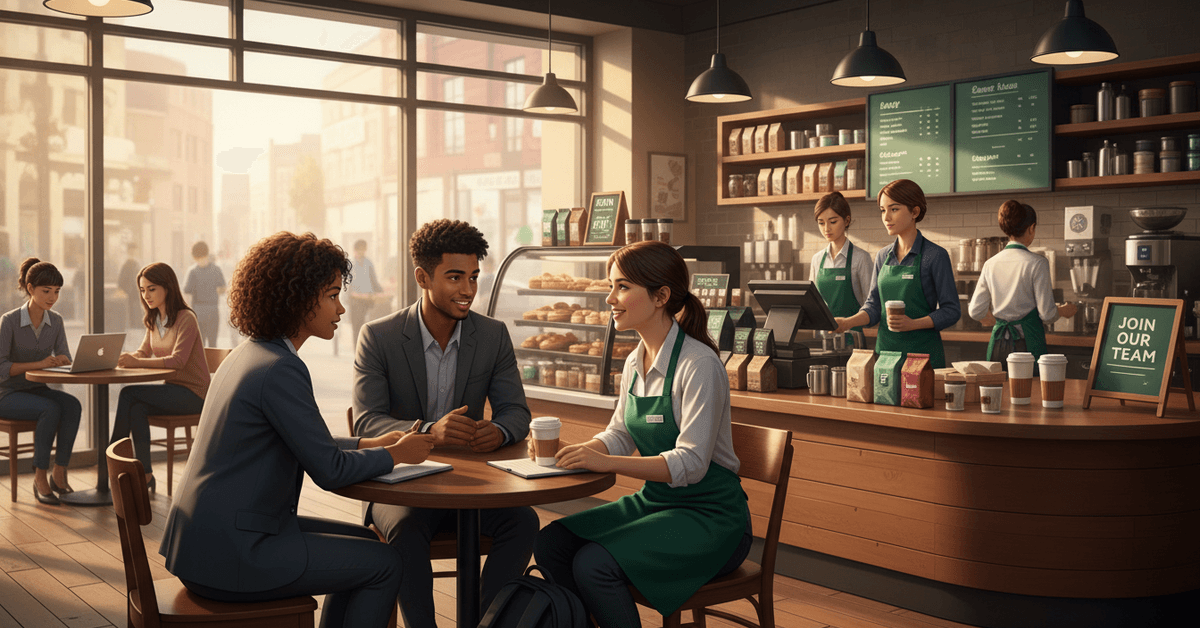
Starbucks barista interviews are usually conversational. Some happen at a table in the store, some are group interviews with several candidates at once. Formal attire isn’t expected. Clean and neat reads as professional enough.
Common questions include:
- “Why do you want to work at Starbucks?”
- “Tell me about a time you handled a difficult customer or a high-pressure situation.”
- “What does good teamwork look like to you?”
- “How would you manage a sudden rush with a short-staffed team?”
Prepare a short story for each of those. It doesn’t have to come from a previous job. A school project with a deadline, a volunteer shift that got chaotic, a time you had to coordinate with people who disagreed with you, all of these work.
The Interview Advice I’d Ignore
Every job guide tells applicants to express their passion for coffee.
I genuinely disagree with this as a strategy, and the reason is specific: Starbucks managers interview dozens of people who claim to love coffee. That line is so common it has stopped registering.
What stands out instead is showing you understand the job physically. Mentioning that you’re comfortable on your feet for long shifts, that you do well under repetition, or that you’ve worked alongside people in tight spaces.
That signals you’ve thought about what the role actually involves, not just the brand.
After the Interview
Background checks happen in some locations before an offer is finalized. Response time varies from a few days to a couple of weeks.
One polite follow-up by email after seven to ten days is appropriate. Calling repeatedly or stopping into the store to ask about status tends to work against applicants.
Training and the First Month on the Floor
New barista training runs roughly two weeks. The mix is hands-on drink practice, register operation, food safety protocols, and time with online learning modules covering company values and allergen awareness.
The allergen training isn’t optional, and taking it seriously matters. Starbucks has a wide range of customers with real dietary restrictions, and errors have consequences.
The National Restaurant Association’s ServSafe program is worth reviewing before your first day even if Starbucks provides its own training. Walking in with food safety basics already in your head makes the onboarding noticeably faster.
Pay during training is the same as regular pay. Expect to shadow experienced baristas for the first several shifts before handling the bar independently.
What Pay Looks Like in 2026
Starbucks barista pay varies by region and aligns with local minimum wage or slightly above it. Tips are included and distributed among the team.
The total hourly take, including tips at a busy location, is often meaningfully higher than the posted wage alone.
Questions People Ask About Starbucks Barista Jobs
Q: Do you need to know how to make coffee before applying to Starbucks? No prior coffee knowledge is required. The training program is built for people who have never worked in a café. What you walk in with matters less than how fast you pick things up during training.
Q: How long does it take to hear back after a Starbucks application? Timeline varies by location and how actively the store is hiring. Stores with open positions often respond within a week. One polite follow-up email after seven to ten days is reasonable if you haven’t heard anything.
Q: Can you get health insurance working part-time at Starbucks? Yes, Starbucks offers health coverage to part-time employees who work a qualifying number of hours per week. The specific threshold can vary, so ask directly during the offer conversation rather than assuming.
Q: What should I wear to a Starbucks interview? Clean, neat clothing is enough. A simple shirt or blouse and closed-toe shoes read as appropriate. No formal attire needed. Looking like you could step onto a shift if asked tends to land well.
Q: Is the Starbucks barista job physically demanding? More than most people expect going in. Long shifts involve standing the entire time, moving quickly during rushes, and staying focused on drink accuracy under pressure. People with prior retail or food service experience adapt faster, but the training is built to get anyone there.
Conclusion
A Starbucks barista job in 2026 offers a benefits package that most entry-level roles skip, especially for part-time workers.
The hiring process rewards applicants who show up prepared with specific examples, not just enthusiasm. Shift flexibility is real, and the path from barista to shift supervisor moves faster than most people expect.
Start with the Starbucks Careers site, be honest about your availability, and go into the interview with at least one concrete story about handling pressure.