Retail fashion jobs sound glamorous until you are standing in an understaffed store during a January sale, folding the same sweater for the third time. Zara jobs are real work. Knowing that going in changes everything.
The application process at Zara is not complicated. But there are a few things that trip people up, and I want to talk about those specifically.



If you have ever applied somewhere, gotten ghosted, and had no idea why, this guide is for you. Zara’s hiring does reward preparation. It also rewards self-awareness more than any retail employer I have researched.
One thing I want to clear up early: Zara does not expect fashion expertise from every hire. What it does expect is adaptability. That distinction matters a lot when you are building your application.
What Roles Are Actually Available at Zara
A lot of people apply to “work at Zara” without thinking about which role fits their actual strengths. That vagueness costs people interviews.
Zara stores run on four main role types:
- Store associate: Customer-facing, stocking, register work, and keeping the floor presentation tight during busy periods
- Visual merchandiser: Arranging displays to match new collection rollouts, requires attention to detail and an eye for proportion
- Cashier and stockroom: Structured tasks, inventory management, back-end support for the sales floor
- Supervisor and manager: Team leadership, performance targets, store standards across all departments
The visual merchandiser role is worth paying attention to if you have any creative background. Prior experience is not always required, but a portfolio or even photos of personal styling projects can set you apart in ways a generic resume cannot.

Which Role Should You Target First?
I think people underestimate how strategic this choice is. Applying for a store associate role when your background is in logistics and organization? That is leaving a better match on the table.
The stockroom role at Zara runs the same inventory rhythm you would find in a warehouse operation, just at a faster pace.
Read the job description carefully. The daily tasks listed there will tell you more about the real job than the title will.
Finding Open Positions Without Wasting Time
The Zara careers page is updated regularly and is the most reliable place to start. Filter by region, position type, and department. Cross-checking there before applying through a job board is worth the extra two minutes.
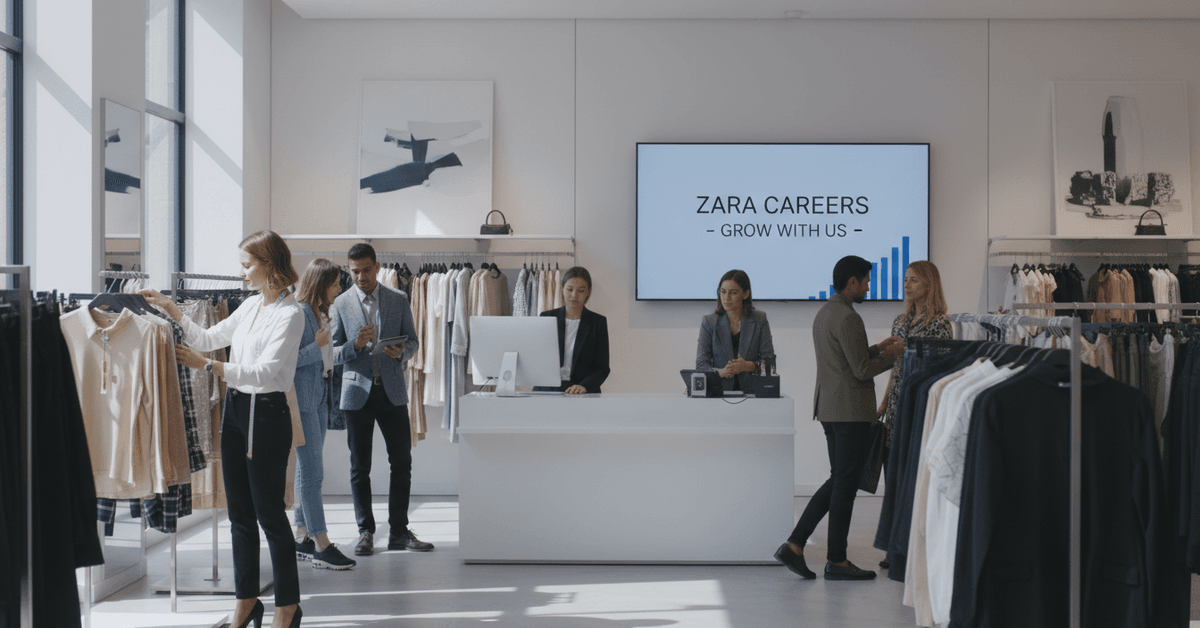
Job boards like Indeed and Glassdoor do list Zara positions, and they add something the official site does not: salary estimates and employee reviews.
Use those for context, not as the primary application channel. Zara’s own portal is where your application actually lives.
One approach that does not get enough credit: walking into a store. Not to hand in a paper resume. Go in, ask politely if there are any openings, and introduce yourself to whoever manages the floor.
This does not work everywhere. But at stores with urgent openings, a real face attached to a name can move things faster than the portal does. It signals initiative, which Zara’s culture rewards.
How to Build an Application That Does Not Look Like Everyone Else’s
Resume and Cover Letter
Zara asks for a current resume. Retail, hospitality, or any fast-paced customer service experience is useful.
If you do not have any of that, your transferable skills need to be front and center: problem-solving under pressure, working with a team, handling difficult people without losing composure.
Keep it concise and organized. Zara stores process a lot of applications. A cluttered, two-page resume for an entry-level position reads as poor judgment.
A cover letter is optional at many locations. If you write one, skip the generic praise and say something specific about Zara’s product approach.
The brand runs on tight collection cycles and speed-to-market. If that pace appeals to you, say why in one clear sentence.
The Online Application Portal
Zara’s recruitment portal is step-by-step and asks for availability, preferred locations, and language skills. Some regions require registration before you can apply. Set up the account first, before you are rushed, so the actual application gets your full attention.
Availability matters more than most applicants realize. Zara stores run on shifting schedules, especially around new collection launches.
If you have hard limits on your availability, be upfront about them. Hiding inflexibility to get the interview and then revealing it during onboarding creates problems for everyone.
Language Skills Can Tip the Balance
Zara operates across dozens of countries. In cosmopolitan cities and flagship stores, bilingual or multilingual staff are prioritized because customer diversity demands it. Spanish, French, Arabic, German, and Japanese are all mentioned as valued languages depending on the location. If you speak more than one language, list it prominently. Do not bury it at the bottom of your resume.
What Zara’s Interview Process Actually Looks Like
I was skeptical about group interviews until I looked at what Zara is actually testing in that format.
The group interview, which is a format used at multiple Zara locations globally, is not about performing for a panel. It is a read on how you interact with other candidates.
Zara’s floor teams are dense. A lot of people working in close proximity, under time pressure, during high-traffic periods.
The group format shows interviewers in about 45 minutes what a one-on-one never could: do you dominate, do you withdraw, or do you collaborate?
What Interviewers Are Looking For
Questions tend to cover three areas: previous work experience, motivation for choosing Zara specifically, and how you handle customer service situations. Know your answers to all three before you walk in.
The brand values question is where people stumble. Zara moves fast. Collections drop, displays change, pricing shifts. An answer that says “I love fashion” does not connect to that reality.
An answer that says “I am comfortable with change and I like working at a pace where the product is always moving” does. That is the difference between an answer that sounds good and one that lands.
One contrarian position I hold: I think rehearsing scripted interview answers for Zara is worse than being unprepared. Zara’s interview process specifically rewards people who respond to situations rather than recite them.
If you have memorized a textbook STAR answer, you are going to sound like every other applicant who memorized the same textbook. Practice thinking out loud, not performing.
Requirements, Skills, and Documentation
The baseline requirements across most markets: 18 years or older, legal right to work, and solid communication ability.
Some locations hire secondary school students for part-time roles. Others require graduates or industry certifications, particularly for management tracks.
Skills that matter most in practice:
- Adaptability: Schedule changes and last-minute floor resets are routine
- Team collaboration: Solo performance reviews are tied to team metrics in most Zara locations
- Detail orientation: Display standards are specific and enforced consistently
- Basic tech comfort: Registers, inventory tablets, and in-store systems are part of the daily routine
Documentation is serious. IDs, tax papers, work permits for non-EU applicants in European locations, and sometimes background checks. Do not show up to onboarding without these.
| Role | Key Skills | Experience Required |
|---|---|---|
| Store Associate | People skills, stamina, flexibility | Not always required |
| Visual Merchandiser | Creative eye, detail orientation | Preferred, not mandatory |
| Cashier / Stockroom | Organization, accuracy, calm under pressure | Entry-level friendly |
| Supervisor / Manager | Leadership, performance tracking | Retail or hospitality background expected |
The management track consistently expects prior experience. Entry-level positions are more open, but the competition is real.
What Happens After You Get Hired
Onboarding at Zara is mostly on-the-job. There is orientation covering store policies, customer service expectations, and safety guidelines.
Some locations run dedicated shadowing periods. Others drop new hires into the flow and let them learn through doing.
The first few weeks are an adjustment. Schedules can shift with little notice. Performance expectations around store appearance and customer satisfaction are real and consistent.
People who thrive here tend to be self-directed and comfortable figuring things out without a lot of hand-holding.
Internal mobility is real at Inditex, Zara’s parent company. Employees who hit targets and show leadership can move into supervisor roles or explore positions at sister brands.
The path is competitive at larger stores, but it exists. For anyone thinking about a longer retail career, that mobility is one of the better structural arguments for starting at Zara over a smaller chain.
For more background on Inditex’s structure and how internal advancement works across brands, the Inditex corporate careers page has specifics that Zara’s own site does not always cover.
Questions People Ask About Working at Zara
Q: Do I need retail experience to get hired at Zara? Not for entry-level positions. Store associate and stockroom roles are accessible without a retail background. What matters more is demonstrating that you can handle a fast pace and work well with a team, both of which you can show through non-retail experience.
Q: How long does it take to hear back after applying? Timelines vary by location and how urgently a store needs to fill the role. Some applicants hear within a week. Others wait several weeks. If you applied through the portal and have not heard back in two weeks, following up with the store directly is a reasonable next step.
Q: What is the dress code like for Zara employees? Smart-casual is the general expectation. Personal style is welcomed as long as it fits Zara’s aesthetic. This is one area where doing some research before your first day actually pays off. Go into the store, look at how current staff dress, and match that energy.
Q: Is the group interview format used at every Zara location? No. Some locations run one-on-one interviews or digital assessments first. The format depends on the region, the role, and how many applicants are in the pool. Ask when you receive your interview invitation so you can prepare for the right format.
Q: Can you move to a different Zara brand after getting hired? Inditex runs eight brands including Pull&Bear, Massimo Dutti, and Bershka. Internal transfers are possible and do happen, particularly for employees who have been in a role for at least six months and have a good performance record. It is not guaranteed, but the pathway is real.
Conclusion
A Zara job in 2026 can be a strong entry point into fashion retail if you know what you are applying for. The hiring process rewards candidates who understand the brand’s pace and prepare for it directly.
Anyone who treats the application like a formality will likely get treated like one in return. The people who land these roles tend to be self-aware, specific, and ready to move fast from day one.