Applying to KFC feels like it should take ten minutes. Fill a form, show up, done. But a surprising number of people get ghosted or fumble the interview because nobody told them what actually matters at the screening stage.
If you’re a student, a career changer, or someone picking up a second income in 2026, this guide skips the cheerleading and tells you what to prepare, what to expect, and where most applications quietly fall apart.


Why KFC Hires More People Than You’d Expect
KFC operates over 27,000 locations in more than 145 countries. Turnover in fast food is high, which means openings appear constantly and the threshold for getting an interview is genuinely low. That’s not a criticism. It works in your favor.
The real appeal for many applicants isn’t the brand name on a resume. It’s scheduling.
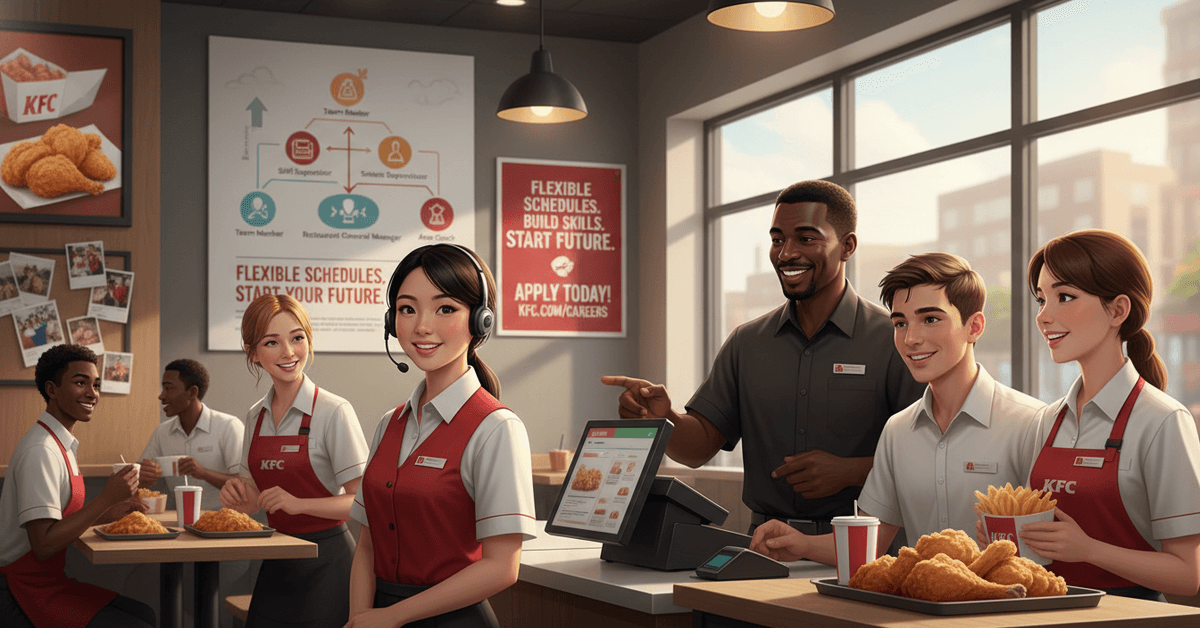
Shifts run mornings to late nights, which means a student finishing class at 3pm can pick up a 4pm to close shift. A parent who needs weekends off can sometimes negotiate that upfront. That kind of flexibility is harder to find at a desk job.
Skills You Build That Actually Transfer
Food prep and drive-thru work aren’t glamorous on paper. Spend two months on a Friday night rush, though, and you develop crowd management instincts that carry into basically every client-facing role that comes after.
Register work also means learning cash handling, order accuracy under pressure, and keeping a short fuse long. I’d argue those three things prepare someone for retail management faster than most formal training programs do.
The Honest Case for Staying Past Six Months
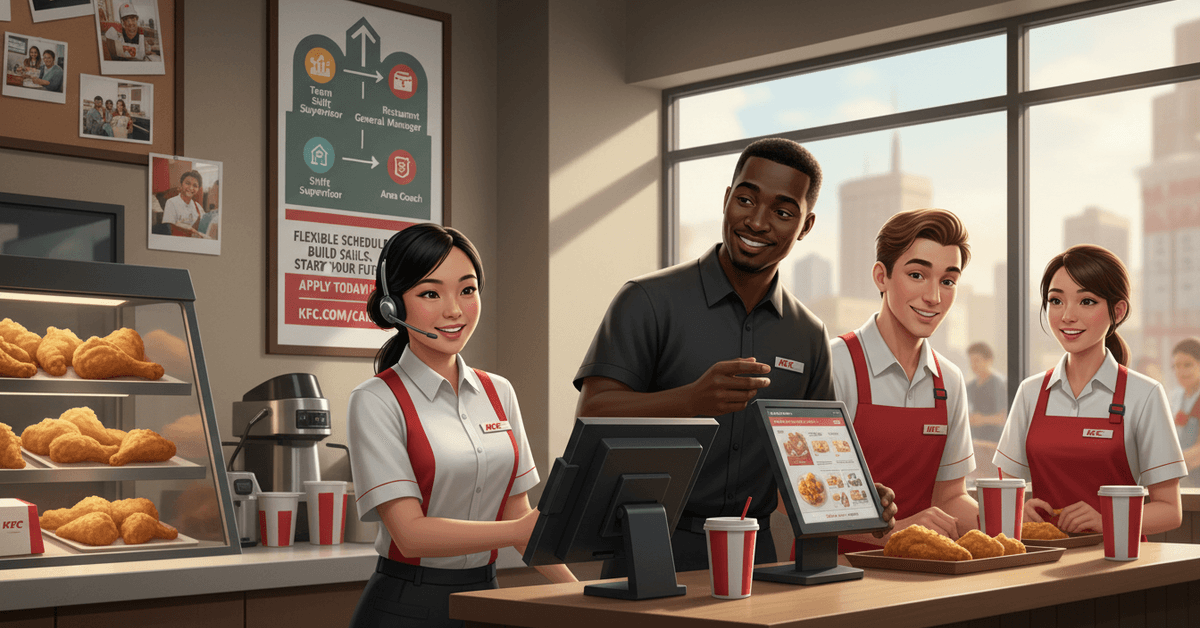
KFC promotes internally for most shift supervisor roles. Team members who stay six months or more frequently move into training responsibilities before any formal title change. That’s a real career path, not a recruiting talking point.
The path to assistant manager or area operations can take two to three years, depending on the franchise owner and location. Regional and national roles in HR or logistics exist for long-timers, but those are genuinely rare.
What You Need Before You Apply
The document checklist is short. Have these ready before you open the application portal:
- Government-issued ID (passport or driver’s license)
- Proof of your right to work in the country
- A current resume, even a one-pager with part-time or school experience
- Basic employment history, including any volunteer work
References are sometimes requested later rather than upfront, but having two contacts ready saves a scramble. Photos are not part of online applications at most locations, though an in-person walk-in might lead to a quick face-to-face that day.
One thing most guides skip: check your email spam folder after submitting. Automated responses and interview invites from KFC’s application system frequently land there, and missing a 48-hour response window can push you to the back of the queue.
Where to Actually Submit Your Application
The cleanest route is KFC’s official careers page. Select your country, browse open positions, and build a profile. This creates a record you can track.
Walk-ins still work at busy mall locations and high-traffic stores. Go outside rush hours, 2pm to 4pm on weekdays tends to work well, dress one level above what the staff is wearing, and ask calmly if the manager is available.
Staff might direct you online anyway, but showing up in person occasionally skips the digital queue entirely.
Third-party boards like Indeed list KFC positions too, but some postings are outdated. Always verify on the official site before investing time in an application that may already be filled.
The Application Steps, In Order
The process is predictable once you know the sequence:
- Submit your application online or in person
- Upload your CV and ID where requested
- Complete a basic assessment (some locations, not all)
- Phone or in-person pre-screening call
- Formal interview invitation
Timeline varies a lot by location. Urban stores with high turnover sometimes call within 48 hours. Quieter suburban locations might take two weeks. If you haven’t heard back after ten days, a brief, polite follow-up email through the careers portal is appropriate.
Minimum Requirements to Get Past the First Screen
KFC keeps entry requirements low deliberately. The list is short:
- Minimum hiring age of 16 in many countries, 18 in some
- Legal right to work
- Basic numeracy for register roles
- Availability for at least some weekend shifts
No degree required. Some stores ask for a food handling certificate, but most offer that training after hiring. Don’t let the absence of one stop you from applying.
What the KFC Interview Actually Looks Like
Most interviews run 20 to 30 minutes, in person with a shift supervisor or store manager. Phone and video interviews happen but are less common for entry-level roles.
I think the biggest mistake applicants make is over-preparing scripted answers instead of staying conversational.
KFC interviewers, at least based on what Glassdoor reviews consistently flag, care more about whether you seem easy to work with than whether your answer to “tell me about a time you worked under pressure” is polished.
Common Questions You’ll Hear
- Why do you want to work at KFC?
- How would you handle a difficult customer?
- Are you flexible with weekend and holiday shifts?
- Can you describe working in a team environment?
- Tell me about a time you managed a stressful situation.
The availability question matters more than most applicants realize. Managers are trying to plug specific gaps in their schedule. Knowing your hard availability limits before the interview, and stating them clearly, saves everyone time.
Interview Prep That Works
Dress one step above what the crew wears. If they’re in uniforms, come in clean jeans and a button-down. Show up two minutes early. Bring a printed copy of your resume even if you submitted online.
Be direct about availability. Share a small, real example from school or a previous job when they ask about teamwork.
If you don’t have work experience, a sports team or group project qualifies. Willingness to learn reads better than confidence that has nothing behind it.
The Roles on Offer and What They Involve
| Role | Core Duties | Prior Experience Needed? |
|---|---|---|
| Team Member | Order-taking, food prep, drive-thru, cleaning | No |
| Cook | Chicken and sides prep, safety procedures | Sometimes |
| Shift Supervisor | Scheduling, staff management, customer issues | Promoted internally |
| Delivery Driver | Local deliveries, area knowledge | Driving eligibility required |
Shift supervisor roles are almost always filled from within. Applying externally for a management position at KFC is possible but uncommon. If that’s your goal, joining as a team member and being vocal about your interest from day one is the faster path.
A Contrarian Take on “Be Yourself” Interview Advice
I genuinely disagree with the standard advice to just be yourself in a fast food interview. That framing puts zero responsibility on the applicant to adapt.
KFC interviews are operational. The manager is figuring out whether you’ll show up on time, follow safety procedures, and handle a rude customer without escalating.
Performing “authentic you” without addressing those three things directly is a waste of the 20 to 30 minutes you have. Show adaptability, not personality.
Pay, Benefits, and Legal Basics
New hires start at minimum wage, though pay rates are sometimes higher in dense metro areas where labor competition pushes franchises above the floor. Overtime rates vary by country and franchise agreement.
Full-time positions may include paid time off, staff meals during shifts, and in some regions, health insurance. Part-time positions typically get fewer benefits, though staff meal discounts are common across locations.
Teens need to check local rules. The US, UK, and Australia all have separate requirements for workers under 18, including work permits, parental permission forms, and shift hour restrictions.
Tax documentation is part of onboarding in every country. Have your tax identification number ready on your first day.
What Happens After You’re Hired
Onboarding runs roughly one to two weeks. Expect a store walkthrough, safety briefings, and shadowing a senior team member before handling tasks independently.
Feedback is ongoing, but the quality varies by store and manager. Some locations run structured check-ins.
Others are more informal. Glassdoor reviews for KFC show a wide spread on management quality, which is partly a franchise model reality. Corporate sets the standards; individual franchise owners set the culture.
Questions People Ask About Getting a Job at KFC
Q: How long does the KFC hiring process take? Urban locations with high turnover often call within two to three days of application. Quieter stores can take up to two weeks. Following up politely after ten days is reasonable.
Q: Do I need a food handling certificate to apply? No. Most KFC locations provide food safety training after hiring. A few franchise owners prefer it, but the absence of a certificate should not stop you from applying.
Q: Can a 16-year-old get a job at KFC? Many countries allow it, but restrictions apply. Shift hours, break requirements, and parental permission rules vary. Check the specific labor laws in your state or country before applying.
Q: Is there room to move up at KFC if I start as a team member? Shift supervisor and assistant manager roles are frequently filled from within, often after six to twelve months of solid performance. Expressing interest early to your manager matters more than waiting for a posting.
Q: What should I wear to a KFC interview? Clean, neat, and one level above the uniform. No need for formal business wear. Jeans and a collared shirt or blouse read as appropriately serious without overdressing.
Conclusion
Preparing your documents before opening the application portal saves a surprising amount of frustration later. Knowing your availability limits going into the interview puts you ahead of most applicants who figure it out on the spot.
The path from team member to shift supervisor is real and moves faster than people assume when interest is communicated early.
Get the application in, follow up once if needed, and treat the interview like an operational conversation rather than a personality showcase.