
Tokyo’s hotel market is busy, international, and shaped by inbound travel.
That demand supports steady recruitment in hotel jobs in Tokyo where English is used every day.
At the same time, hotel work in Japan sits under clear labor rules and immigration requirements.
Why Tokyo hotels hire English speakers
Hotels in Tokyo handle a constant flow of international guests who expect smooth communication.
English is also used for email support, reservation changes, and coordination with overseas travel agencies.
Because hotels run on fast handoffs between departments, employers often value candidates who can communicate clearly under pressure.
In practice, many “English-speaking” hotel roles still involve some Japanese at work, especially for internal communication.
English-speaking hotel jobs in Tokyo you’ll see most often
Below are the most common Tokyo hospitality jobs where English is frequently used. Job titles vary by employer, but the tasks are similar.
Front desk and guest relations
Front desk is the clearest English-facing role.
You support check-in and check-out, answer questions about transport and the neighborhood, handle room changes, and respond to guest issues.
Many hotels also expect you to write short English emails and handle phone calls.
Reservations and booking support
Reservations roles focus on booking systems, email replies, phone support, and coordination with travel agencies.
In larger hotel groups, one reservations team may support multiple properties, which means you may handle international requests daily.
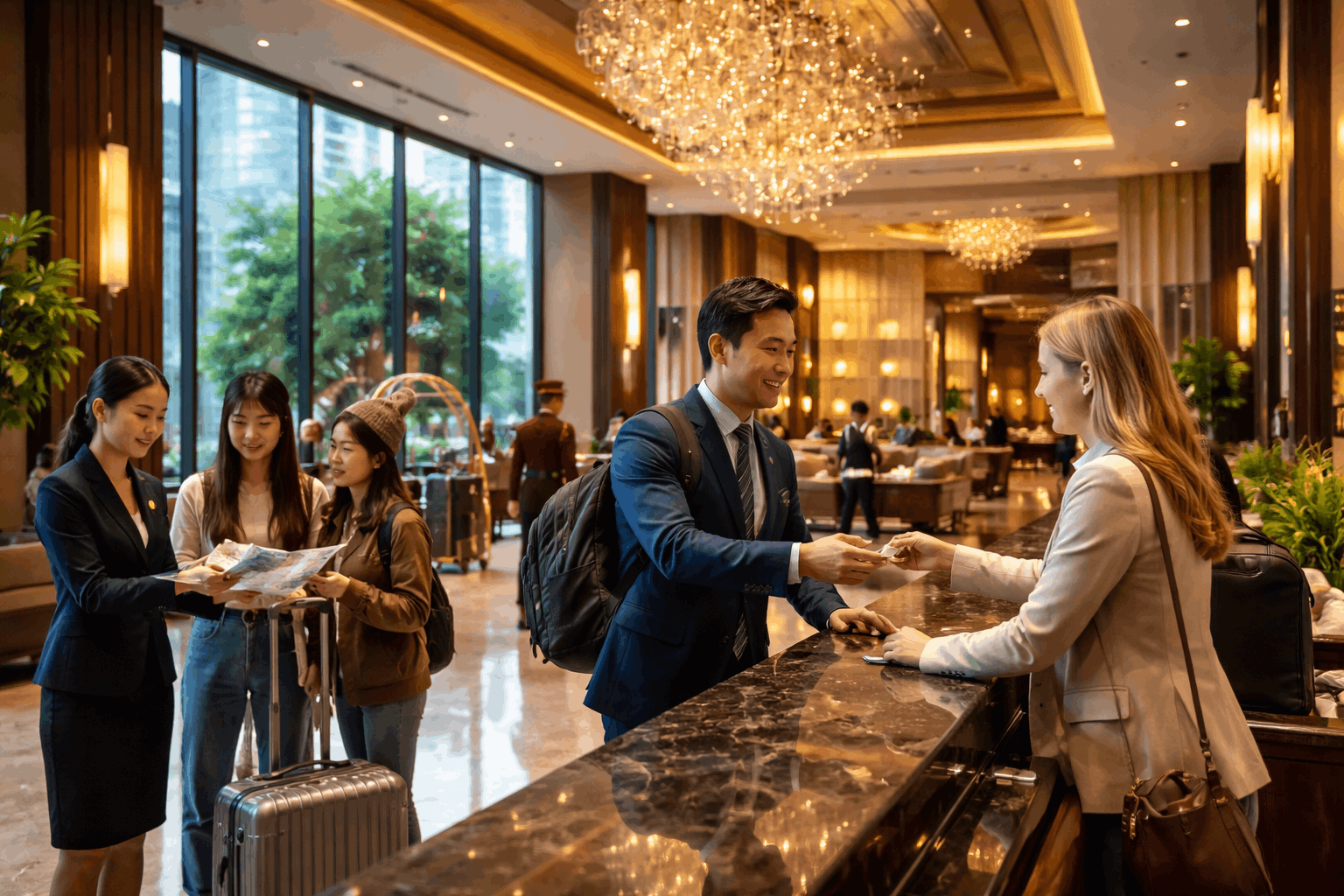
Concierge and lobby support
Concierge work tends to be English-heavy in international districts.
You help with restaurant bookings, directions, luggage support, transport, and guest problem-solving.
The best candidates show calm communication and strong local knowledge.
Food and beverage service in international properties
Restaurants, lounges, and banquet teams in international hotels often need staff who can explain menu items, manage allergy questions, and respond politely to guest requests.
English skill matters most in higher-traffic properties with overseas guests.
Back-of-house roles with limited English
Housekeeping, laundry, and kitchen support can require less English, but basic guest interaction still happens.
These hotel jobs in Tokyo are also often posted as hourly or shift work.
If your English is strong but your Japanese is still developing, some candidates start here and move toward guest-facing roles later.
Tokyo hotel jobs salary: what you can verify
Pay depends on role type, shift pattern, and whether the job is hourly or monthly.
A solid baseline is Tokyo’s legal minimum wage, which was set at ¥1,226 per hour effective 01 de outubro de 2025.
From there, the most reliable way to estimate the market is to use job ads that publish ranges.
English-friendly postings for Tokyo hotel front desk and concierge work often show monthly salaries in the low-to-mid ¥200,000s-¥300,000s.
Ask these questions early
Is the salary base pay only, or does it include allowances? Is transportation covered, and are there caps?
Are night shifts required, and is there a separate premium? Is overtime expected, and how is it calculated?
If a listing is vague on these points, treat it as a reason to verify details before you accept an interview schedule.
Hotel jobs in Japan for foreigners: work authorization basics
Employers can only hire you if your status of residence permits the job duties you will perform.
Rules vary by visa type, and hotel jobs in Tokyo can mean different things depending on whether you are doing.
If you are in Japan on a non-work status, such as a student status, you may need separate permission for paid work and you may face hour limits.
Because immigration situations can be complex, treat this as something to confirm through official channels.
Two pathways you will see
Work-authorized statuses are used for professional roles tied to your background and the job description.
The Specified Skilled Worker (i) pathway in the Accommodation field.
These exist specifically to address labor needs in accommodation and have published program guidance.
Where to find Tokyo hotel hiring posts that match English skills
You will typically find Tokyo hotel hiring in three places:
1) English-friendly job boards
Some job boards regularly post hotel roles that accept foreign applicants and list English requirements clearly.
These listings often include salary ranges, shift details, and whether Japanese is required.
2) Foreign-resident focused platforms
Platforms that target foreign residents in Japan can make it easier to filter for hospitality categories and English-friendly roles.
The quality varies, so prioritize postings that show concrete details like location, schedule, and pay.
3) Direct hotel career pages and recruiters
Large hotel brands and major Japanese chains often post jobs on their own career sites.
Recruiters and staffing agencies also advertise hotel roles, especially when hiring is urgent.
Agency roles can be legitimate, but you should confirm the contract conditions, worksite location, and pay structure in writing.
How to apply strategically
A simple, repeatable process will help you apply faster and avoid mismatches.
Step 1: Target the role type that matches your language level
If your Japanese is limited, focus on international properties and roles that explicitly require English.
If your Japanese is stronger, you can target a broader set of hotels because you can handle internal coordination more easily.
Step 2: Prepare documents the way employers expect
Hotels value clarity and reliability. Keep your CV consistent with dates and job titles, and be ready to explain gaps.
If the employer requests a Japanese-format résumé, follow that instruction.
If English is accepted, keep the layout simple and focus on guest service and teamwork outcomes.
Step 3: Show service ability, not just language
Hotels hire for calm problem-solving. Prepare short examples of how you handled a complaint, a busy shift, a mistake, or a last-minute change.
Hiring managers often care more about your approach than the “perfect answer.”
Step 4: Confirm work authorization early
If you need sponsorship or a status change, clarify this before late-stage interviews.
Some employers can support certain cases, others cannot. Getting this aligned early saves time for both sides.

What helps you stand out in Tokyo hospitality jobs
Hiring managers often look for the same traits across properties:
- Shift flexibility, especially weekends and nights.
- Professional English, including simple, polite email writing.
- Basic Japanese hospitality language, even if the role is English-heavy.
- Reliability, punctuality, and comfort with checklists and standard procedures.
- Teamwork, because hotel work depends on fast handoffs between departments.
Conclusion
English-speaking hotel work in Tokyo is real, and it tends to concentrate in front desk, reservations, concierge, and international food and beverage teams.
Use Tokyo minimum wage as your baseline, then compare real job listings that publish pay ranges.